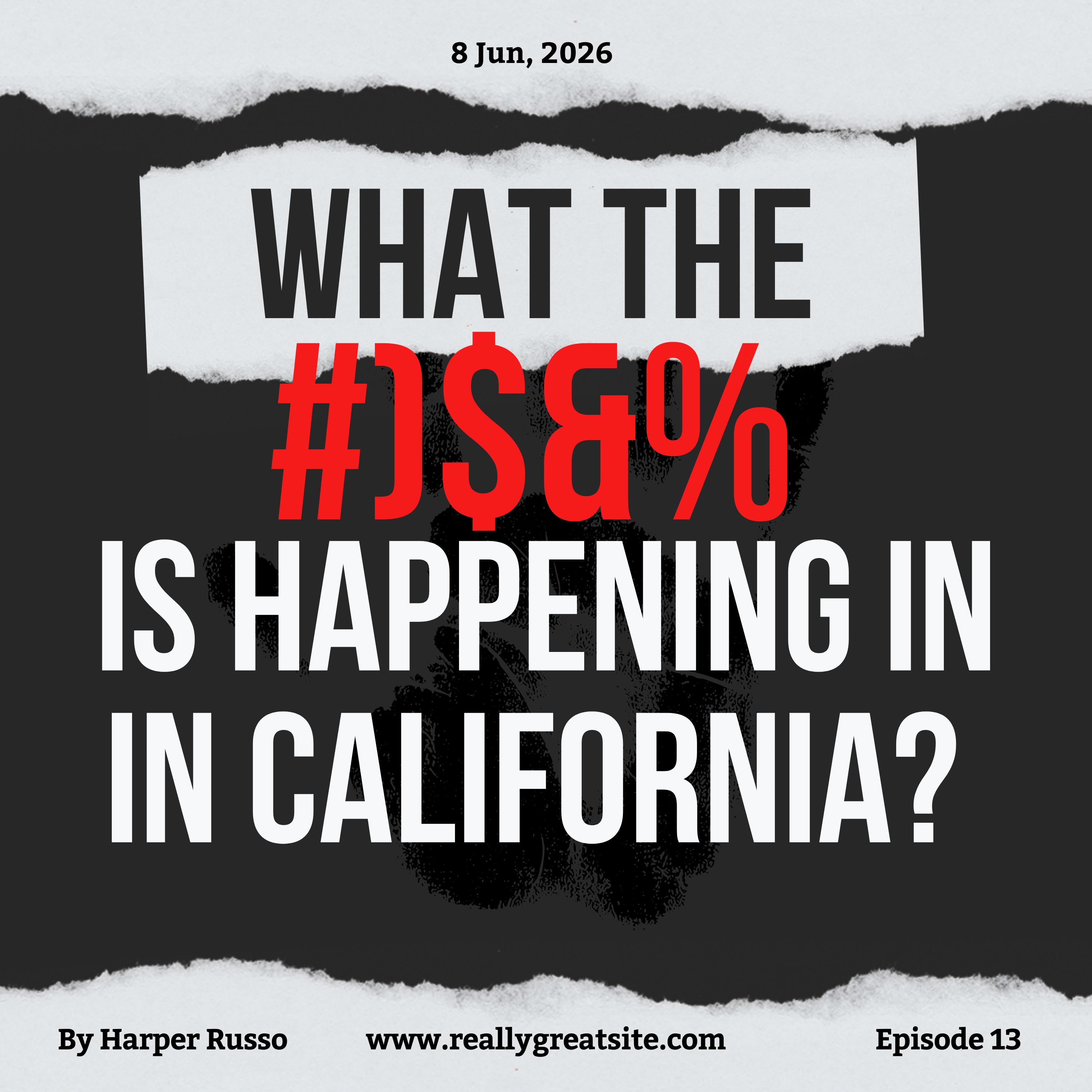
California Election Counting Explained by an Actual Poll Worker


 Apple Podcasts
 Spotify
 Castro
 RSS Feed
 California election counting has confused — and frankly ticked off — a lot of people, and I get it. I'm W. Curtis Preston, I've worked every California election since the 2016 presidential primary, and I've managed the polls at multiple elections here in San Diego County. This episode, I'm going solo to explain exactly what's going on, why it takes so long, what the "red mirage" actually is, and why none of it is fraud. Sorry to disappoint some of you.
If you've ever had a family member call you asking "what the hell is going on over there?" — this one's for you. I walk through the specific changes California made to election law, how our system compares to Florida's, why human nature is a big part of the problem, and what the chain of custody for every single ballot actually looks like from the inside. This isn't punditry. This is someone who has stood at those poll books, sealed those ballot cartons, and escorted those ballots to the DART team.
Chapters:
0:00 – Introduction: What the hell is going on in California?
1:23 – Who I am and why I can speak to this
2:12 – How California election law changed six years ago
4:43 – The mail ballot window: postmark by 8 PM, received within 7 days
5:09 – Vote centers vs. the old precinct model
7:39 – California vs. Florida: why the laws produce such different results
9:09 – Why California voters wait until the last minute
14:12 – The red mirage explained: it's not fraud, it's math
15:31 – Signature verification: 80,000–100,000 per day in San Diego alone
16:35 – How computers count ballots — and the 1% manual audit that checks them
19:11 – Chain of custody: two people, sealed cartons, tracked numbers
20:17 – Debunking the "law enforcement can't observe" myth
21:24 – Dead people voting? Let's talk about what's actually happening
22:47 – Wrap-up
What the hell is going on in my state of California?
Speaker:Why don't we have election results yet?
Speaker:it's a great question.
Speaker:remember when you used to turn on the TV on election night and by
Speaker:the end of election night, maybe even over dinner, you had a pretty
Speaker:good idea of who was going to win?
Speaker:And then over time, that ha- that sort of bled into very late at
Speaker:night, and then sometimes it, it bled into the next morning, right?
Speaker:You woke up the next morning and you had a new president.
Speaker:that's changed over time, and when you have a state as large as
Speaker:California, people get annoyed that they don't know, what's happening.
Speaker:And again, they think that it means something untoward.
Speaker:And, and so they get, they get mad at us and they want, they wanna know,
Speaker:"What the hell is going on over there?" So that's what this episode is about.
Speaker:it is definitely a departure from my normal content.
Speaker:and, uh, Prasanna's not even here.
Speaker:I decided to just do this one on my own.
Speaker:but, if you're interested in it and you wanna know what's actually happening,
Speaker:then, you know, this is for you
Speaker:I am an election worker, and I have, I have actually managed,
Speaker:the polls at several elections.
Speaker:I've worked every election since the 2016 presidential primary, which in
Speaker:California is a bunch of elections, right?
Speaker:We've had primaries, we've had, presidential elections,
Speaker:we've had midterm elections.
Speaker:We had a special election to potentially recall our governor.
Speaker:We had the Prop 50 election.
Speaker:I've worked a lot of elections, and I think I have a pretty firm grasp of the
Speaker:way things are run here in California, and I can especially speak to, with a
Speaker:great degree of certainty how things run here in San Diego County, which are
Speaker:indicative of the rest of the state, given that the why we do things the
Speaker:way we do, i- is driven by state law.
Speaker:what am I gonna talk about?
Speaker:first off, m- I'm gonna talk about just, why things are working the way they are,
Speaker:specifically changes that we made in the election law back about, six years ago.
Speaker:and one of the things I hear is, Florida does mail-in votes.
Speaker:Florida can do it in a, in a day.
Speaker:Why can't California?
Speaker:there's also this thing called the red mirage.
Speaker:The red mirage i- is a real thing, uh, and I can explain why it happens,
Speaker:and, and that it's not fraud.
Speaker:Sorry to disappoint some of you.
Speaker:for example, We saw it in the gubernatorial primary where initially
Speaker:the Republican candidate, which was, uh, Steve Hilton, was ahead, and then
Speaker:the, the Democratic candidate, Becerra, pulled ahead of him in the polls.
Speaker:The- so they, they call that the red mirage.
Speaker:Why does that happen?
Speaker:and why doesn't any of this mean voter fraud?
Speaker:and by the way, uh, if you wanna reach out to me, if you wanna talk
Speaker:to me, if, if you wanna interview me, to talk about this somewhere
Speaker:else, I'm more than happy to do that.
Speaker:I believe in what we're doing here in California.
Speaker:not everything, okay?
Speaker:I'm not -- Just because I live in California doesn't mean I like everything.
Speaker:I d- I don't like this.
Speaker:I don't like having to explain things like this.
Speaker:I don't like the fact that, you know, my family from afar… I, I spoke
Speaker:to my father earlier today, and the first thing he said is, you know,
Speaker:"How's the, how's the counting going?"
Speaker:Right?
Speaker:I don't like that.
Speaker:I don't like the way it makes us look.
Speaker:but at least I think I can speak to it from a, a certain degree of, of authority.
Speaker:How did, how did we get here?
Speaker:So what happened is we made some changes in the, the election law
Speaker:that allowed us to send a ballot via mail to every registered voter.
Speaker:prior to that, you had to actually register for a mail-in voting
Speaker:the way it is in Florida, right?
Speaker:Where you have to actually request.
Speaker:Uh, you didn't need a, a reason, but you just, you did have to request
Speaker:in advance to get a mail ballot.
Speaker:I did.
Speaker:I had a mail ballot, prior to, this happening.
Speaker:But then we started mailing, ballots to every, uh, registered voter, and it…
Speaker:This was done at the time, COVID had a lot to do with it.
Speaker:The idea was that people didn't wanna go to the polls, and so we wanted
Speaker:to allow people to vote and then, it worked, and so we continued, right?
Speaker:Uh, we basically continued this process.
Speaker:it wasn't done via some, any sort of executive decision.
Speaker:We voted on this idea.
Speaker:Uh, we, and we put this into law that we could do this.
Speaker:And, the, uh, and the way California law is that As long as the ballot is
Speaker:mailed and postmarked by election day, specifically by 8:00 PM on election day,
Speaker:and it's received within seven days of the election, then, it, it will be processed.
Speaker:so that's the, the two big things that… And that's really
Speaker:what we're talking about here.
Speaker:We also made some other changes, which, at least here in San Diego, we went
Speaker:with what we call the vote center model, where we went with a smaller number of
Speaker:digitally connected vote centers versus the, thousands of, um, like small places
Speaker:like garages where you, you had to go to a particular person's, you know, typically
Speaker:like a person's garage and you would, vote in person and you had to go to a
Speaker:particular precinct because the printed voter roll, that's where that was, and you
Speaker:went, you saw your name, you signed your, name next to that, and then, you voted.
Speaker:the downside to that was if you couldn't get to that one particular
Speaker:location, you either couldn't vote or you had to vote provisionally,
Speaker:which nobody wanted to do, right?
Speaker:Uh, because it, it makes your vote take longer to process and such.
Speaker:So we went with this vote center model where you can go to, I believe
Speaker:it was around two hundred and eighty vote centers in San Diego County,
Speaker:where you could go in person.
Speaker:We have an electronic poll book.
Speaker:That poll book, is directly connected via secure connection
Speaker:to the registrar of voters.
Speaker:You log in there, and you get a paper ballot, and then that
Speaker:paper ballot is then treated just like every other paper ballot.
Speaker:That was another change we made.
Speaker:But both of these things, the reason why I mentioned that, that other change,
Speaker:even though it's not relevant to this particular discussion, is that both
Speaker:of these things were done to increase voter access, to make it easier to vote.
Speaker:We went with up to eleven days of early voting, which I'm sure some of you think
Speaker:is ridiculous, but that's what we did.
Speaker:We went to up to el- you can vote up to eleven days early,
Speaker:uh, at these, uh, vote centers.
Speaker:And, um, the, and that was done to accommodate different people's, uh,
Speaker:working schedules and things like that.
Speaker:But the big thing, and the thing that's really relevant here
Speaker:is this mail-in ballot, right?
Speaker:the, um, it makes it super easy.
Speaker:Basically, all you have to do is mark your ballot, drop it in the mail, done.
Speaker:You can just do it right at your house, drop it in your
Speaker:mailbox, and off the ballot goes.
Speaker:You can also drop it at a vote center.
Speaker:You can drop it at a library.
Speaker:There's all of these, uh, drop boxes that are not handled by the mail system.
Speaker:They're, they're handled by the Registrar of Voters or the ROV, as I may call it.
Speaker:so some of you might say, "Well, you're not the only
Speaker:state that does mail-in ballots.
Speaker:What about Florida?
Speaker:Florida has mail ballots, and they, they manage to process them, roughly
Speaker:by election or maybe the next day.
Speaker:So why is it that California is so messed up?" is basically
Speaker:what some of you, might say.
Speaker:here it is.
Speaker:The-- When you look at specifically Florida versus California,
Speaker:the law is very different.
Speaker:With Florida, your ballot has to get there by seven PM on the night of the election,
Speaker:or else it will not be processed.
Speaker:So if you mail the ballot, even if you mailed it early enough for it to
Speaker:normally get there, and then the mail service is late and delivers your mail
Speaker:ballot the day after the election, it will not be processed, okay?
Speaker:That's just the way Florida law works.
Speaker:whereas in California, as long as you mail it or drop it off by eight
Speaker:PM on, the election day, Friday, then, uh, it will be processed.
Speaker:Uh, the signature will be verified and all that stuff, but it will be processed.
Speaker:And I think those big differences between two laws really explains what's going
Speaker:on here, and that is The vast majority of voters in Florida, because they
Speaker:know if they don't mail it in time, their ballot is not gonna get counted,
Speaker:they mail it early because they don't want the-- they don't trust the mail
Speaker:system, and so they either drop it off in person early or they mail it early.
Speaker:And they do that because of that hard, fast, deadline.
Speaker:In California, I think because they know that it's gonna be up to a
Speaker:week, and they know that generally speaking, the postal service is gonna
Speaker:deliver things, within a week, they wait until the last possible minute.
Speaker:Uh, and I have data to back this up.
Speaker:But, th- so what people do is, 'cause I've spoken to them, is they watch the
Speaker:polls, Let's say for example, you're Republican and you were interested
Speaker:in Steve Hilton and Chad Bianco.
Speaker:a-as the polls sort of got closer to the election, it looked like, Hilton was gonna
Speaker:have a much better chance of, of winning.
Speaker:And so you might say, "Well, I like Chad Bianco, but I'm gonna vote for
Speaker:Steve Hilton instead because he has a much better chance of winning," and
Speaker:because, by the way, this is also really important, California runs on what's
Speaker:called, we call it the jungle primary.
Speaker:The top two getters of votes, um, are what goes to the, the actual election.
Speaker:if you-- Which means that you're not guaranteed to get a Republican
Speaker:or a Democrat in the election.
Speaker:There was a time not that long ago when it looked like we might
Speaker:have two Republicans in there.
Speaker:It looked like it might be, uh, Hilton and Bianco as the,
Speaker:the two people in the election.
Speaker:There would be no Democrats, and this was because, we had the, the
Speaker:guy that dropped out, and we had
Speaker:50-something Democrats running for, uh, governor, and that they were
Speaker:splitting the vote between all of them.
Speaker:So there w- there w- there was this worry that you-- that there was gonna be no
Speaker:Democrats, and then the, then the s- the Republicans are now starting to worry
Speaker:that there's gonna be no Republicans.
Speaker:It's because there's a jungle primary, okay?
Speaker:So people were saying, "You really gotta use your vote strategically." And so they
Speaker:waited until the last few days before the election to see how are things shaping
Speaker:up, and they see… And by the way, this is an-- this is based on, this is based
Speaker:on polls, not election results, because we do not reveal the election results
Speaker:until after the close of the election.
Speaker:So just based on polling, people were saying, "Okay, Hilton is looking better
Speaker:on the Republican side. Becerra's looking better on the, uh, Democrat
Speaker:side. I'm gonna cast my ballot for one of those because that's the, you
Speaker:know, this the side I'm on, and I don't want to, quote, 'waste my vote'
Speaker:on somebody that's not gonna win."
Speaker:So all of that put together means that a whole bunch of people cast their
Speaker:ballots at the last minute, and they either dropped it off at a ballot
Speaker:station or, uh, they either dropped it off at a vote center or a drop box, or
Speaker:they dropped it in the mail and so the result was when you look at-- Uh, again,
Speaker:I'll speak to just San Diego County.
Speaker:When I looked at the number of ballots, It looks based on what
Speaker:I saw that they can process about eighty thousand to a hundred thousand
Speaker:ballots per day in San Diego County.
Speaker:This is verifying the signature, right?
Speaker:the ballot shows up, they take an image of that signature across…
Speaker:That's on one side of the ROV.
Speaker:On the other side, there's this, large room full of
Speaker:people who are just doing this.
Speaker:They have an image of the signature from the ballot.
Speaker:Uh, the, the-- there's a barcode that identifies who that ballot is associated
Speaker:with, which then allows the system to pull up all of the images that they
Speaker:have, on that person, and then they, they do a signature verification.
Speaker:So they're doing that one ballot at a time, one person at a time,
Speaker:and they can do about eighty to a hundred thousand ballots, a day.
Speaker:And they'll start processing them as soon as they come in.
Speaker:But the problem is we got… In San Diego County alone, we got eight hundred
Speaker:thousand ballots, and most of those came in, based on what I saw, most
Speaker:of those, about six hundred thousand of them, my best estimate, about six
Speaker:hundred thousand of them came in on or about the day of the election.
Speaker:And so they're processing them at about eighty to a
Speaker:hundred thousand ballots a day.
Speaker:And as of this recording, which is, Sunday, June 7th, they still
Speaker:have about two hundred thousand ballots to go because, again,
Speaker:eighty to a hundred thousand a day.
Speaker:and, um, and that's why it's taking so long.
Speaker:Is there-- is it because of the way the laws work and because of
Speaker:the way the voter behavior is?
Speaker:The vast majority of them show up at the last minute, and then we
Speaker:have to process them one by one.
Speaker:It's isn't about counting.
Speaker:Counting will take minutes.
Speaker:Literally, once they get all of these ballots, as soon as
Speaker:they, they process ballots, the counting is done automatically.
Speaker:That's done via, uh, you know, machines that count ballots, okay?
Speaker:Then there's what's called the red mirage.
Speaker:What is that?
Speaker:this really started happening back in the 2020, election.
Speaker:and, I'm gonna make some statements that some of you won't
Speaker:agree with, and that's fine.
Speaker:But just a statement of fact is that, President Trump As it looked like he
Speaker:might lose the 2020 election, he made a number of statements, that were
Speaker:very much against mail-in voting.
Speaker:since that day and all the way up to today, right?
Speaker:President Trump has continued to be against mail-in voting,
Speaker:or at least mass mail-in voting the way we do in California.
Speaker:He doesn't like it, and he's made his followers know that
Speaker:he doesn't like it, which means that they tend to vote in person.
Speaker:I see it myself when I work the polls.
Speaker:A lot of people make it known that they're Republican and that that's why they think
Speaker:they should vote on Election Day and they should think they should vote in person.
Speaker:They're not a big fan of the mail-in ballots.
Speaker:So what that does is the, is that those ballots, they either vote very early or
Speaker:they vote in person, which what that does is it creates a big batch of early ballots
Speaker:that are counted because the votes that go to the vote centers get counted first.
Speaker:And so, the…
Speaker:you, you get a scenario like you had with our governor race, where initially Steve
Speaker:Hiltzen was out ahead, and then as they continued to process the mail ballots
Speaker:were disproportionately, uh, Democratic.
Speaker:And so the… so then Becerra pulled ahead.
Speaker:It's not due to fraud, it's just due to the fact that more Republicans
Speaker:vote in person or early, and, uh, the Democrats vote generally by mail and
Speaker:are often, uh, being very strategic as to when they mail their ballot,
Speaker:and they often mail it very late.
Speaker:That's all it is, right?
Speaker:So that's, that's what the mire- the red mirage is about.
Speaker:But this process simply takes a long time.
Speaker:Like I said, in San Diego County, they're doing 80 to 100,000 signature
Speaker:validations every single day, and they've got about 800,000 to get through.
Speaker:They started a few days before elections.
Speaker:It looked like ballots started show-- the vast majority of ballots showed up
Speaker:a couple of days before the election.
Speaker:They processed those.
Speaker:Uh, they then continued another, uh, 80 to 100,000 a day.
Speaker:They've got about 200,000 left.
Speaker:And so I would estimate by possibly late Tuesday, maybe early Wednesday, uh, they
Speaker:will have processed all the signatures.
Speaker:Counting the ballots is easy.
Speaker:That goes very quickly, And then what happens is you have
Speaker:the unofficial count, right?
Speaker:Uh, the news will report on… The news is already reporting that Becerra is
Speaker:going to advance to the general election.
Speaker:That is the news, and that is a statistical probability, not
Speaker:anything official that comes from the count- the state.
Speaker:But then what happens is, and, and again, I think it's important for
Speaker:you to understand that we do use computers to count the ballots, right?
Speaker:But here's the thing, we d- we… It's a trust but verify.
Speaker:there's a Ronald Reagan quote for you there.
Speaker:what if there's a, a supply chain attack on, uh, the, the
Speaker:systems that count the ballots?
Speaker:What if they're, when they count, they throw every third
Speaker:ballot or whatever, right?
Speaker:and th- this was something that was alleged back, during the
Speaker:2020 election that, that… uh, and it was alleged, um, a lot.
Speaker:and, so how do we validate that?
Speaker:That's what the 1% is for.
Speaker:So the 1% check, we pull roughly 1%.
Speaker:I say roughly 1%, it's because it's based on pulling of cartons, not ballots.
Speaker:I don't wanna go into too much detail, but roughly 1% of the ballots.
Speaker:And then those ballots are counted carton by carton, ballot by ballot,
Speaker:and compared against the, the machine results for that carton.
Speaker:And, uh, it's done by human beings.
Speaker:One person sitting at the head of the table reading the, the ballots, right?
Speaker:and then, uh, two other people, uh, doing a manual tally of each race, right?
Speaker:And then, and then they add it all up, and then this person gives their
Speaker:number, this person gives their number, and then this should match.
Speaker:the results from the machine,
Speaker:If they don't, then guess what?
Speaker:They do it all over again.
Speaker:and so any of the kind of things that, that California is being accused of, um,
Speaker:and other systems are being accused of, that this would find any systemic issues.
Speaker:So that takes time, right?
Speaker:Verifying, in the case of San Diego County, eight hundred
Speaker:thousand signatures, takes time.
Speaker:By the way, I did see a- another number, and that was that only
Speaker:thirty thousand ballots today, which is, um, let's see, by s- Friday.
Speaker:So we had the election on Tuesday, so Wednesday, Thursday and Friday,
Speaker:only thirty thousand ballots were received after election day.
Speaker:We're talking eight hundred thousand ballots, most of them
Speaker:received before election day.
Speaker:So it's not even this whole thing about whether we should or shouldn't
Speaker:get ballots after election day.
Speaker:The problem is human nature is causing them to wait till the last
Speaker:possible minute, causing all the ballots to show up all, all at the
Speaker:same time, and then we gotta verify them, and it takes a long time.
Speaker:So that's why, what is happening is happening and, um, uh, you
Speaker:know, just a couple of things.
Speaker:Again, California is following California law, right?
Speaker:Uh, I, I think it's also important to note other important things
Speaker:that, like, no ballot is ever left in the, the custody of one person.
Speaker:There is a chain of custody for every single ballot from w- uh, when it's
Speaker:created to when it's, transported to what we call it, which is DART,
Speaker:which it's a centralized team that then takes the ballots for that.
Speaker:So in our area, I'm in-- I was at Bonsall.
Speaker:our DART team is in, uh, Fallbrook.
Speaker:We have two people that leave our vote center at the end of each day to take the
Speaker:ballots and escort them over to a team of two, who are then… They're collecting
Speaker:the ballots from that area, and th- they, they take that and take it down.
Speaker:So it's always two people with the ballots.
Speaker:And also the ballots are tracked from the, Each vote center has three
Speaker:numbers that they get to check.
Speaker:We know, we have a number that shows us how many people checked into the
Speaker:electronic poll books, the EPPs.
Speaker:We have a number that shows us how many people printed ballots out from
Speaker:the BMPs, the ballot marking devices.
Speaker:And then we have how many ballots are physically in our hands, and those
Speaker:numbers should all match, right?
Speaker:And by the… We also seal, by the way.
Speaker:We seal the cartons before they leave, right?
Speaker:so there'd be no way for, even if two people wanted to somehow
Speaker:collude and stuff ballots.
Speaker:So the numbers wouldn't match, the seal would be broken.
Speaker:The seal is signed by everybody.
Speaker:There's a cust- a chain of custody from the moment that ballot, uh,
Speaker:is created to all the way into the end, over there, in the ROV.
Speaker:I saw some crazy things in the last couple of days following stuff on
Speaker:Facebook, and one of them was about our newest law, which, you know, they
Speaker:said, "Well, it prevents, uh, outside people, prevents law enforcement from
Speaker:observing the election." That is nonsense.
Speaker:That is not what that law said.
Speaker:What the law said was that what that sheriff did, in Riverside County,
Speaker:I believe it was, where he seized the ballots and had them in his
Speaker:own possession outside of the ROV.
Speaker:That's what we specifically made illegal.
Speaker:we basically said that is, illegal to seize ballots in that way.
Speaker:but guess what?
Speaker:That same sheriff could come…
Speaker:You can go, any person, including law enforcement, including anyone
Speaker:who distrusts the systems, can go to, at any point and observe
Speaker:the system from beginning to end.
Speaker:And by the way, we get observers all the time.
Speaker:So the entire process has a great chain of custody, has observers all
Speaker:the time, has people digging into the numbers to figure out, you know, if,
Speaker:if anything like, like dead people voting, that whole, that whole thing.
Speaker:But some- I just, just had a discussion online with somebody who's like, "Yeah,
Speaker:but dead people are getting, ballots because of the way we do things."
Speaker:Yes, dead people are sent ballots.
Speaker:They're not getting ballots, but they're sent ballots.
Speaker:but here's what's not happening.
Speaker:The dead people aren't voting You, you don't have to trust me.
Speaker:Go check out the Heritage Foundation.
Speaker:They did an investigation into, like, a whole bunch of things, and
Speaker:they didn't find this kind of thing.
Speaker:There's, there's allegations that this is happening all the time, uh, and
Speaker:it's… it just isn't happening, at least not in any significant numbers
Speaker:to do, You know, did one or two, quote-unquote, "dead people" vote?
Speaker:Possibly.
Speaker:but, because basically where that even could happen is where you get a ballot.
Speaker:it would have to be really purposeful.
Speaker:But, like, i-i-if a quote-unquote, "dead person" could try to vote by, let's
Speaker:say you have a husband and wife, the wife has passed, the husband gets the
Speaker:ballot, and he signs his wife's name.
Speaker:Theoretically, that would cause the dead person to vote.
Speaker:But guess what?
Speaker:That's not happening, right?
Speaker:What could happen is, you could see someone trying to vote, and
Speaker:just grabbing their wife's ballot.
Speaker:But guess what?
Speaker:Each mailed ballot has a barcode that identifies what voter that is.
Speaker:So if he opens up the wrong ballot and signs it, then that would look
Speaker:like a dead person tried to vote, when in reality it was just, the
Speaker:person grabbing the wrong ballot.
Speaker:Uh, but the sig- the signature wouldn't match, so ultimately
Speaker:that person would not get to vote.
Speaker:anyway, I hope this is helpful.
Speaker:I just wanted to help explain why is California so different
Speaker:than, let's say, Florida.
Speaker:th-there is a significantly higher number of votes.
Speaker:There is a significantly higher percentage of votes that come in by mail, eighty
Speaker:percent in California versus twenty-one percent in Florida, that from the last
Speaker:election that I could get numbers for.
Speaker:and, and because of the way the laws are, they come in at the last
Speaker:minute, and it takes a long time to do signature verification on
Speaker:millions and millions of votes.
Speaker:if you have questions, post them on YouTube, and, um, I hope this helps.
Speaker:That's a wrap
Speaker:The Backup Wrap-Up is written, recorded, and produced by me, W. Curtis Preston.
Speaker:If you need backup or DR consulting, content generation, or expert witness
Speaker:work, check out backupcentral.com.
Speaker:You can also find links for my O'Reilly books on the same website.
Speaker:Remember, this is an independent podcast, and any opinions that
Speaker:you hear are those of the speaker and not necessarily an employer.
Speaker:Thanks for listening